

Operations Management
Leadership
Artificial Inteligence
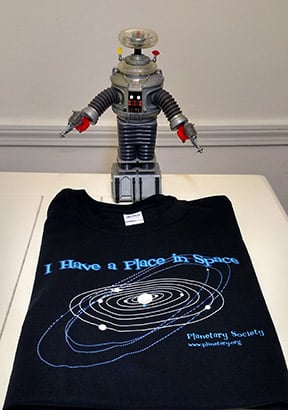

Humanoid robots weren’t available in an adult amusement park in 1983. And in 1997, the only “Robot” that would warn me of danger was a toy. It looks like the timelines predicted in “Westworld” and “Lost In Space” were off by more than a few years.
 However, robots have been in use for decades in print and mail production. They aren’t necessarily attractive, don’t engage in conversation, and won’t foil the plots of nefarious doctors. Yet robots have become invaluable differentiators in profitability and competitiveness.
The two most common robots in use today are robotic arms and collaborative robots (CoBots).
My first experience with robotic arms were in postal facilities. High-speed, 6-axis arms are used to stack mail trays on pallets. Using scanners to read tray labels, the robot will select the correct pallet and ensure the trays are oriented correctly. Upon arrival at the next center, another robot can unload the pallet.
Similar robots are used in the printing industry for loading plate cylinders on presses, placing book blocks in binding lines, and moving pallets of paper to offset presses. In wide format operations, the robots can handle the heavy substrate loading/unloading on flatbed and hybrid presses.
Robotic arms have become a subset of CoBots. Modern CoBots are fitted with sensors and cameras, allowing them to work alongside human employees in a shared workspace. In the print area, robotic vision systems precisely inspect output for consistency of colors and resolution. In mailing, a robot can sleeve and takeaway output while the operator focuses on the inserter.
With labor shortages and the retirement of skilled operators, these tools provide resilience by taking away heavy, repetitive tasks. With more companies adopting the technology, investment costs are trending downward, translating to a much faster return on investment (ROI).
The robots are here. Just not what I expected.
Amazing Astronomical Fact: The first robot in space was the satellite Sputnik 1, launched on October 4, 1957. The spacecraft had a simple objective – send radio signals back to Earth. The batteries lasted only three weeks, and it fell back into the atmosphere three months after launch.
That brief mission launched the Space Age, still going strong 70 years later.
#artificialintelligence #ai #education #robots #production #cobots #roboticarms #theberkshirecompany