Artificial Inteligence
choosing
AI

Artificial Intelligence (AI) is a powerful tool. But that’s all it is – a tool. And one of many tools that are used by humans.
This isn’t something new, as technology has always been part of our evolution. The difference, similar to the impact of the World Wide Web in the 1990s, is the intensity of the changes brought by AI, and the tempo of the changes.
The difficulty in dealing with the tempo of technological change was recognized over 50 years ago by Alvin Toffler in his book Future Shock (1970). It’s essential that when celebrating the opportunities AI may bring, that we also make humanness an equal partner.
AI may help boost people’s performance. However, it may also negatively impact morale and increase boredom. Our responsibility as leaders is not only to maximize efficiencies, we also need to support the people we work with and are part of our organization.
Remember that humans have the edge when it comes to relationships. A robot (software or hardware) cannot:
This was touched on in another book from the 20th century, Megatrends (1982) by John Naisbitt. When describing the concept of “High Tech/High Touch”, Naisbitt pointed out that every time a new technology is introduced, a compensating human response or "high-touch" element must accompany it. It serves as a guide for balancing innovation with our human need for connection.
We’re humans who use tools. AI is the newest tool.
No tool, no matter how powerful, will replace our need for other humans.
Amazing Astronomical Fact: Venus has often been called Earth’s “sister planet”. It’s of similar size and distance from the Sun. But it’s different by every other measure. One single day on Venus (one full rotation) takes longer than a full year to orbit the Sun, and it rotates backwards.
It’s also inhabitable. Venus is the hottest planet in our solar system, with surface temperatures hovering around 870 degrees Fahrenheit (465 degrees Celsius). The air pressure on the surface is about 90 times that of Earth—the equivalent of being roughly a mile underwater. The atmosphere is over 96% carbon dioxide and is covered by cloud of sulfuric acid.
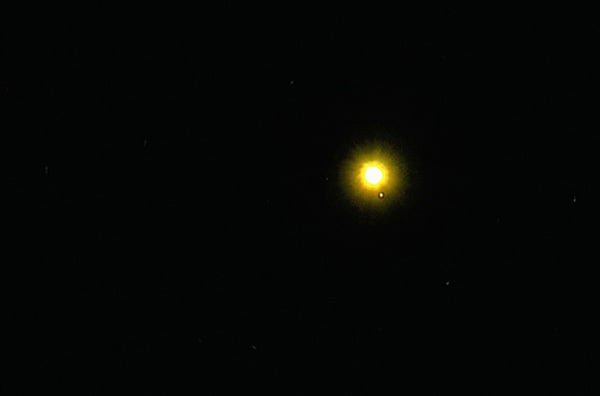
The image with this post is a photo of Venus taken at twilight - the best time to view our closest planetary neighbor.
#artificialintelligence #ai #humans #hightechhightouch #theberkshirecompany

Missed a past newsletter? No worries they're all saved on our Thursday Thoughts on AI page.