It’s a nice message. But when PMG Donahoe says “We are stronger together”, who does he mean by “we”?+ Read More
The Berkshire Company Blog
Posted by Mark Fallon on Mar 27, 2014 6:00:00 AM
Posted by Mark Fallon on Mar 13, 2014 9:07:07 AM
It’s almost time for one of my favorite weeks of the year – the National Postal Forum (“NPF”). The NPF will be held March 16-19, 2014, at the Gaylord National Hotel and Convention Center, outside of Washington, DC. In addition to opportunities to hear from senior United States Postal Service officers, and visit vendors at the exhibit hall; attendees can choose from more than 130 workshops to learn more about the industry.
This year, I’ll be presenting 6 different workshops at the NPF:
Boot Camp for Mail Center Managers, Part 1
Sunday, March 16, 1:45 PM – 2:45 PM (Chesapeake 3)
Boot Camp for Mail Center Managers, Part 2
Monday, March 17, 1:30 PM – 2:30 PM (Natl Harbor 10)
Public Speaking and Powerful Presentations
Monday March 17, 11:00 AM – 12:00 PM (Chesapeake 6)
Quality Control in Mail Center Operations
Tuesday, March 18, 2:45 PM – 3:45 PM (Natl Harbor 10)
Succession Planning for Mail Center Managers
Monday, March 17, 4:00 PM – 5:00 PM (Chesapeake A)
Untold Tales
Wednesday, March 19, 2:00 PM – 3:00 PM (Chesapeake 6)
I hope we can connect at one of my classes, or catch up at one of the networking events.
See you in DC!
+ Read More
Posted by Mark Fallon on Mar 11, 2014 6:00:00 AM
In my last post, I talked about the value of trade shows, and shared the advice of my good friend, Paul Balbastro, for getting the most out of a conference: the "30-30-30-10 Rule". Paul says you should spend:
Most people follow only 3 of Paul's recommendations. Too many ignore the most important one – networking. Many times, people attend a conference and not network with a single new person. They might nod to the person next to them in a class, but they don’t take the opportunity to get to know them.
Networking is the one self-improvement activity that anyone can do, regardless of age, education, job description or talent. And it's the one self-improvement activity everyone must learn to be succesful. Here are 6 tips to help you be a better networker:
1. Have a positive attitude. People like to meet upbeat people. If you display an attitude of confidence and resolve, people will want to talk to you. Watch what happens in any room. People are drawn to those who look like they belong, who look like they're happy to be there. They aren’t attracted to people who have what I call "Eeyore Syndrome."
You remember Eeyore, don’t you? He’s the donkey from the Winnie the Pooh stories. Remember how he was always in a gloomy mood? No matter who came up to him, and whatever their mood was, his response was always, "Oh well". I mean even when Tigger came bouncing up (because that's what Tigger's do best), what did Eeyore say? "Oh well."
Do you want to hang out with an Eeyore? No, you want to be around people who are upbeat and confident. People who know what they want. Remember, confidence and resolve, not egotism and stubbornness. Positive, not overbearing.
2. Look people in the eye when you’re talking to them, and more importantly, when they’re talking to you. Don't be looking around the room for someone else to talk to. Give the person in front of you visual signals that you’re listening to what they’re saying. Nod your head if they say something you agree with. Smile when they say something humorous. Let them know that they have your attention.
3. When talking with someone, look for the ways you’re similar, not different. Pick up on what the person says that is in common - directly or indirectly - with you. Acknowledge that you can relate to what they're talking about. If they mention the Eeyore Syndrome, let them know you love the Pooh stories. Ask them who their favorite character is. (Who's your favorite character? Mine's Edward Bear.) Use the conversation to connect, not separate.
4. Years ago, I met Rod Walz. Rod invented one of the first automated certified mailers, and I hope to see him again at the National Postal Forum this year. Rod said to be remembered, be interested, not interesting. Don’t try and impress people with stories of your own achievements. Don't try and show how smart you are, or how interesting you are. Let them have the spotlight, and show an interest in what they’re talking about. Ask questions about their area of interest or expertise. Find out why they're interesting. Be the audience for a while.
5. Your mother was right, politeness counts. Show respect to the people you’re talking to. "Sir" and "Ma'am" are still appropriate, no matter what century we're living in. Don’t use off-color language or tell risqué jokes when you're meeting people. Never put down anyone else – any person, any race, any religion, or any nationality. You don’t know who you may offend. This isn’t political correctness, it’s politeness. Oscar Wilde once said, "A gentleman never hurts someone's feelings, unintentionally." Be a gentleman, be a lady. And if you hear gossip, please don’t repeat it.
6. Follow up. Meeting people is only the first step in networking. It's the seed you plant. And you must cultivate the seeds in the garden that is your network in order for it to grow. You must follow-up. You can follow-up with emails or a letter, maybe even a hand-written letter, after meeting someone. If you aren't following up, you aren't networking.
Some people aren’t comfortable in social situations, or introducing themselves to strangers at a conference or other event. They may be shy, introverted or uneasy in large groups. But we must remember that there are people who want to meet us.
Here are a 5 more tips for the introvert in all of us:
1. Don’t go alone. Attach yourself to someone that is already a good networker. Walk with them as they work the room. They’ll help you meet new people. I started this article quoting advice from Paul Balbastro. In the world of mail, Paul is the absolute best networker. I've been told that the Postmaster General calls Paul to find out the scoop on the industry. This guy is connected. When I started attending national conferences, I always hung out with Paul. Through him, I met more people, and developed the skills, and more importantly, the confidence to network on my own. Find a Paul Balbastro.
2. Practice. Remember, this is a skill. Before going to an event, remind yourself that you’re going to network. Prepare yourself for going up to people and introducing yourself. Preparation doesn't make networking any less authentic.
3. Listening is good. If you’re by nature a quiet person, that’s okay. Remember the mantra – be interested, not interesting. People love to hear the sound of their own voice. And if you can be their audience, they’ll thank you for it. They'll remember you for it. They'll love you for it.
4. Remind yourself – networking is a survival skill. You have to do it. There are no guarantees in life. You are going to come up against problems and difficulties where you will need help. If it’s 3 o’clock in the morning, and the water pipes have burst, that isn't a good time to start looking for a reliable plumber. If tomorrow your boss tells you your job has been eliminated, that isn't a good time to start building connections to your next job. Build your network now.
5. Remember, you are the only you and the best you in the world. You bring something special and unique to other people’s networks. They want the opportunity to meet you, and learn more about you.
I want to meet you and get to know you. That will only happen if you network.
+ Read More

Posted by Mark Fallon on Mar 5, 2014 7:27:00 AM
In the age of the Internet, budget cutbacks, and increased demands for time, are trade shows and conferences still relevant? The answer is a resounding “Yes!”
Posted by Mark Fallon on Feb 26, 2014 5:30:00 AM
Posted by Mark Fallon on Feb 19, 2014 7:00:00 AM
Before becoming a consultant, I had what my friends call "a real job", managing the mail operations for a large financial services company. At least once a week, my lead manager would come into my office about an unexpected job coming over from Print Services. The piece, which often didn't match our equipment specifications, was usually a rush job, often needing to be folded, inserted and delivered to all 12,000 employees, that same day!
After conducting an assessment of our other responsibilities, we'd put together some crafty scheduling and assign our best operator to run the difficult job. Then we'd scramble the couriers and add another mail run to meet the deadline. Barely. Again.
Posted by Mark Fallon on Feb 12, 2014 5:30:00 AM
The recent postal rate increase has caused budget problems for many print and mail operations managers. It may not be possible to offset all extra expenses due to the rate hike, but you may be able to make small adjustments to other areas. Small adjustments that can add up to big savings over time.
Here are 20 tips to help save money this year:
People
1. Review current staff for performance levels, skill sets and flexibility, Replace poor/marginal employees with people who will deliver results.
2. Time staffing levels with expected volumes. 40 hours per week doesn’t mean 9:00 to 5:00 for all employees, or Monday through Friday.
3. Consider part-time and temporary help. Students (high school and college) are looking for opportunities to gain experience in the business world.
4. Make training a priority – procedures, postal and equipment. It’s always less expensive to have well-trained employees do something right the first time, than to have to correct the work a second time.
5. Cross-train whenever possible. Employees should be able to cover for each other during periods of high volumes or absences.
6. Provide education for your customers. Make sure your customers (internal and external) understand the different classes of mail and the impact content, shape and size have on postal rates.
Process
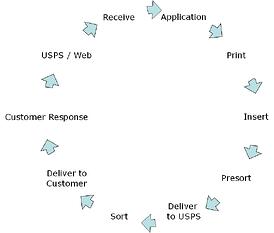
7. Document your processes. With your staff, conduct a process-mapping session that accurately depicts how work is completed in your shop. Keep this map posted in plain sight.
8. Eliminate redundancies wherever possible. Review your processes to uncover and remove all unnecessary steps.
9. Review your space plan/footprint. Make sure that the location of people, equipment and supplies support an efficient workflow.
10. Post a daily/weekly/monthly schedule of events. Help your staff prepare for projects and mailings that you know will be occurring.
11. Hold daily huddles to review priorities. The daily huddle is the cornerstone of effectove team communication - whether it is a team of 2 or a team of 200.
12. Capitalize on core competencies and smart-sourcing. Select the right operation for the right job, internally and externally.
13. Implement a chargeback system. Department managers are more mindful of their requests when the costs – labor, print and postage – directly impact their budget.
14. Review/renegotiate contracts with vendors. Ensure that you are getting the best possible solution at the best service levels and the best possible price.
Technology
15. Implement an address management program – internal and external. Properly addressed mail pieces get delivered quicker and less expensively.
16. Start using the Full-Service Intelligent Mail Barcode (IMb). While not mandatory, using the Full Service IMb qualifies mailers for USPS incentive programs and an additional $0.003 per piece discount.
17. Utilize an automated inbound package/accountable mail tracking system. Speed up delivery times and eliminate phone calls with a web-based tracking system.
18. Promote the use of desktop shipping software for overnight and priority packages. Systems will help end-users select the right vendor for the right service at the lowest cost.
19. Implement a work order or job tracking system. Managers and employees are more efficient when they know what work needs to be completed and where jobs are in the process.
20. Review all equipment for replacement/upgrades. Newer technology usually means faster processing speeds and lower cost-per-piece processing.
Bonus tip: remember to keep track of all your savings, and be sure to include individual and combined savings in your monthly budget reports.
Do you have a tip to share? Please join the conversation and leave a tip in the comments section below.
+ Read More
Posted by Mark Fallon on Jan 29, 2014 5:30:00 AM
When choosing a disaster recovery provider for print/mail services, all of the rules pertaining to selecting an outsourcing vendor apply. An important additional rule: actual experience in disaster recovery. An experienced vendor knows how to stay calm and react appropriately in times of crisis.
+ Read More
Posted by Mark Fallon on Jan 15, 2014 1:59:50 PM
Posted by Mark Fallon on Jan 6, 2014 4:31:00 PM
Without an accompanying press release, Federal Register notice or advisory, the United States Postal Service (“USPS”) released the new postal rates on the “Postal Explorer” page of their website. On the left hand navigation bar of the page, users can download the rates in either Excel or .CSV format. Also, the new postage statement forms have been posted.
The new rates are consistent with the December 24, 2013 decision of the Postal Regulatory Commission (“PRC”) to conditionally approve the USPS request for an exigent rate case. Under the decision, the USPS will be able to raise rates by approximately 6%, and maintain those rates until they recoup the calculated $2.8 billion loss due to the “Great Recession” of 2009.
For almost 2 weeks, the mailing community has been waiting for some type of decision by the USPS. Through the Postal Customer Councils, the USPS released a statement that they were disappointed in the PRC decision, and were going to take time to analyze the new rates. However, there was no follow-up communication.
Under the new rates, the greatest impact will be on mailers who meet don’t presort their mail to the higher levels. As the table below shows, First Class Mail single piece rates will increase by 6.52%, and mixed AADC rates by 7.41%. On the other hand, AADC/3-Digit rates will only increase by 5.73% and 5-Digit rates by 5.83%. This means that the savings for AADC/3-Digit presort improves to $0.084 per piece, and 5-Digit to $0.109 per piece.
The Berkshire Company improves business processes in your print & mail operations, helping you solve real problems.